
Best Surf Fishing Setup for Florida Beaches (2026): Rod, Reel, Line & Rigs
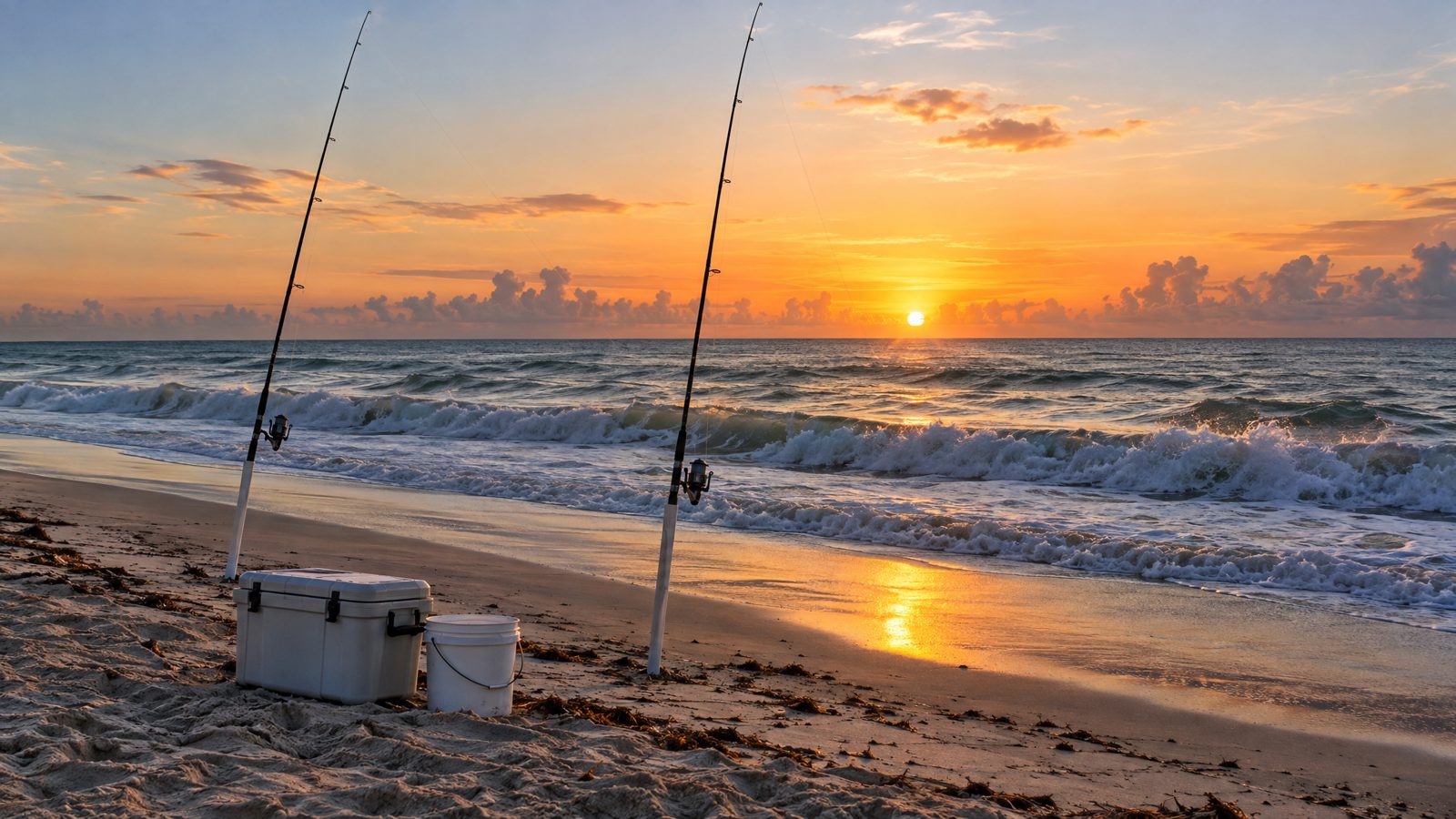
Florida surf is not one place. A calm Gulf beach near Naples and a windy Atlantic beach near Melbourne call for different gear. This guide builds one complete setup that handles both, explains why each piece matters, and points you to researched picks for every budget.
Quick Picks
As an Amazon Associate we earn from qualifying purchases. Picks are based on research of specs and typical Florida conditions.
- Check Price
Best value surf rod
Ugly Stik Bigwater Surf Spinning Rod (10–12 ft)
Fiberglass/graphite blend that shrugs off sand, salt, and drops. A forgiving choice for beginners and rental-house anglers.
- Check Price
Best all-around surf rod
PENN Prevail II Surf Spinning Rod (10–11 ft)
Graphite composite surf blank built for casting heavy sinkers from the beach. A strong middle ground for Atlantic and Gulf surf.
- Check Price
Best surf reel
PENN Battle III Spinning Reel (5000–6000 size)
Full metal body and carbon fiber drag washers at a mid-range cost. The 5000–6000 sizes match 10–11 ft surf rods well.
- Check Price
Upgrade surf reel
Daiwa BG Spinning Reel (5000–6500 size)
Large line capacity and a smooth, strong drag for bigger bluefish, jacks, and redfish in the wash.
- Check Price
Main line
PowerPro Spectra Braid (20–30 lb)
Thin braid casts farther into the wind and lets you feel bites at long distance.
- Check Price
Leader / shock leader
Fluorocarbon or Mono Leader (20–40 lb)
Adds abrasion resistance against sand, shells, and gill plates, and protects braid on hard casts.
- Check Price
Pompano rig
Pre-tied Pompano Double-Drop Rigs with Floats
Two hooks with small floats lift bait off the bottom where pompano and whiting feed. Easy for beginners.
- Check Price
Sinkers
Pyramid Sinkers (2–5 oz)
The point digs into sand and holds your bait in the current. Carry several weights for changing surf.
- Check Price
Artificial bait
Fishbites Sand Flea / Clam Strips
Long-lasting scented strips that stay on the hook. Great as a backup or paired with natural bait.
- Check Price
Rod holder
Surf Sand Spike Rod Holder
Holds the rod tip high above breaking waves so line stays out of the wash.
The Short Answer: A Complete Florida Surf Setup
If you want one setup that works on most Florida beaches, start here: a 10 to 11 foot medium or medium-heavy surf spinning rod rated for roughly 2 to 6 ounces, a 5000 to 6000 size saltwater spinning reel, 20 to 30 lb braided main line, a 20 to 40 lb fluorocarbon or mono leader, a pompano-style double-drop rig, and 2 to 5 ounce pyramid sinkers.
Add a sand spike, a small cooler, and a sand flea rake, and you have everything you need to target pompano, whiting, bluefish, black drum, redfish, and Spanish mackerel from the beach. The rest of this guide explains why each piece matters, so you can adjust for your beach and budget.
Atlantic vs. Gulf: Why Your Beach Changes the Gear
Florida Atlantic beaches, from Fernandina down to Jupiter, usually have more wave energy, stronger longshore current, and wind out of the east or northeast for much of fall and winter. That means heavier sinkers, longer rods, and a stronger drag. A 10 to 12 foot rod helps you cast past the first sandbar and keep line above the breakers.
Gulf beaches, from Pensacola to Marco Island, are often calmer with clearer water and gentler slopes. Fish frequently feed close to shore in the first trough, sometimes just a few yards from your feet. A 9 to 10 foot rod with 2 to 3 ounce sinkers is often enough, and lighter leaders can draw more bites in clear water.
If you fish both coasts, a 10 foot rod rated around 2 to 6 ounces is the most flexible choice.
Choosing a Surf Rod: Length, Power, and Material
Length gives you casting distance and keeps line above the surf. Most Florida anglers do best with 10 to 11 feet. Shorter than 9 feet struggles in rough Atlantic surf; longer than 12 feet gets heavy to hold and cast all day.
Power should match your sinker weight. Every surf rod prints a lure or sinker rating on the blank. For Florida, look for a rating that covers 2 to 6 ounces. A rod that is too light will not launch a 4 ounce sinker; a rod that is too stiff makes it hard to see subtle pompano bites.
Material matters for durability. Fiberglass and fiberglass-composite rods are heavier but nearly indestructible, which is perfect for beginners and kids. Graphite composite rods are lighter and more sensitive, which helps you feel bites at distance. Either works; choose by how often you fish and how carefully you handle gear.
Look for corrosion-resistant guides and reel seats, and rinse the rod with fresh water after every trip.
Choosing a Surf Reel: Size, Drag, and Saltwater Protection
Match the reel size to the rod. For 10 to 11 foot surf rods, a 5000 to 6000 size spinning reel balances well and holds enough line for long casts and running fish. For a 12 foot rod or heavy Atlantic surf, step up to an 8000 size.
Prioritize a metal body or side plate, a smooth drag that does not stick, and some form of saltwater protection such as sealed bearings or drag seals. Sand and salt are the biggest reel killers in Florida.
Spinning reels are the best choice for most surf anglers because they cast easily into the wind and do not backlash. Conventional reels can cast farther in skilled hands, but they take practice.
Line and Leader: Braid vs. Mono
Braided line in the 20 to 30 lb range is the most popular main line for Florida surf today. It is thinner than monofilament of the same strength, so it casts farther and cuts through wind and current. It also has almost no stretch, which makes bites easier to feel.
Monofilament in the 15 to 20 lb range is cheaper, more forgiving, and easier to untangle. It is a fine choice for beginners and for calm Gulf beaches.
With braid, always add a leader. A 20 to 30 lb fluorocarbon leader of a few feet is common for pompano and whiting. If you cast heavy sinkers hard, a 30 to 40 lb shock leader long enough to wrap around the reel spool several times protects the braid from snapping on the cast. Connect braid to leader with a double uni or FG knot.
The Best Surf Rigs for Florida
Pompano or double-drop rig: two short dropper loops with small floats or beads, size 1 to 2/0 hooks, and a sinker at the bottom. This is the go-to rig for pompano, whiting, and croaker. The floats and bright beads lift bait slightly and attract fish in the surf.
Fish-finder or sliding sinker rig: the sinker slides on the main line above a swivel, followed by a 2 to 3 foot leader and one circle hook. Fish can take the bait without feeling weight, making this rig a strong choice for redfish, black drum, and larger fish using cut bait.
Spoon or jig for active fish: when bluefish or Spanish mackerel push bait along the beach, a metal spoon or jig retrieved quickly can outfish bait. Keep a small spoon in your bag for these blitzes.
Use pyramid sinkers on most days. In heavy Atlantic surf, a sinker with grip wires holds better. On calm Gulf days, 2 ounces is often enough.
Bait: What Florida Surf Fish Eat
Sand fleas, also called mole crabs, are the top natural bait for pompano and whiting. Look for V-shaped ripples in the wet sand as waves recede and scoop them with a sand flea rake. Soft-shell fleas carrying orange eggs are especially effective.
Fresh or frozen shrimp works for almost everything that swims in the surf. If soft shrimp keeps flying off on the cast, see how to keep frozen shrimp on the hook. Clams are excellent for black drum and whiting. Cut mullet or ladyfish is a strong bait for redfish, bluefish, and larger predators.
Scented artificial strips such as Fishbites last longer than natural bait and stay on the hook in rough water. Many anglers use them alone or tipped with a piece of shrimp.
When to Fish: Seasons, Tides, and Reading the Beach
Fall and spring are the most productive seasons on most Florida beaches. Pompano follow cooling water south along the coast in fall and return north in spring. Whiting are available much of the year. Bluefish are common in cooler months, Spanish mackerel show in spring and fall, and redfish often run the beaches in late summer and fall.
Moving water matters more than time of day. Many anglers prefer the last couple of hours of the incoming tide and the first part of the outgoing. Early morning and evening often bring better bites, especially in summer.
Learn to read the beach. Look for troughs, which show as darker, calmer water between the shore and a sandbar; cuts, where waves stop breaking across a bar; and points where shells and debris collect. Fish use these spots to ambush food carried by the current. Cast to the trough first before trying to reach the bar.
Beach Gear That Makes the Day Easier
A sand spike keeps your rod tip high and your reel out of the sand. A beach cart saves your back if you carry more than one rod. Bring a small cooler with ice for bait and catch, needle-nose pliers for unhooking, a rag or towel, sunscreen, polarized sunglasses, and plenty of water.
Keep spare rigs pre-tied in a small box so you can re-rig quickly. Rinse your rod, reel, and terminal tackle with fresh water after every trip to prevent corrosion.
Florida Rules You Need to Know
Most anglers in Florida need a saltwater fishing license to fish from the beach unless they qualify for an exemption. Florida residents can choose a no-cost shoreline license that covers fishing from land or a structure attached to land. Size limits, bag limits, and seasons change, so always check the current rules on the official Florida Fish and Wildlife Conservation Commission (FWC) website before you fish.
If you plan to target sharks from shore, Florida requires a shore-based shark fishing permit and specific circle hooks when using natural bait. Many beaches also have local rules about fishing near swimmers or lifeguard stands. Follow posted signs, keep a safe distance from swimmers, and release unwanted fish quickly.
Official rules: myfwc.com/fishing/saltwater/recreational
Bottom Line
For most Florida beaches, a 10 to 11 foot surf rod, a 5000 to 6000 size saltwater spinning reel, 20 to 30 lb braid with a fluorocarbon leader, pompano rigs, and pyramid sinkers will cover nearly every situation. Start simple, learn to read troughs and cuts, use fresh sand fleas when you can find them, and fish the moving tide. Use the quick picks above to build your setup at the budget that fits you.
Frequently Asked Questions
What size rod is best for surf fishing in Florida?
For most Florida beaches, a 10 to 11 foot medium or medium-heavy surf rod rated for about 2 to 6 ounces works best. Calm Gulf beaches can use 9 to 10 feet; rough Atlantic surf may call for 11 to 12 feet.
What reel size should I use for Florida surf fishing?
A 5000 to 6000 size saltwater spinning reel pairs well with a 10 to 11 foot surf rod. Step up to an 8000 size for 12 foot rods or heavy surf.
What is the best bait for surf fishing in Florida?
Sand fleas are the top natural bait for pompano and whiting. Shrimp works for nearly everything, clams are great for black drum, and cut mullet is a strong choice for redfish and bluefish. Scented strips like Fishbites make a good long-lasting backup.
Do I need a fishing license to surf fish in Florida?
Most anglers need a saltwater fishing license unless they are exempt. Florida residents can get a no-cost shoreline license for fishing from land. Check myfwc.com for current license rules, exemptions, size limits, and bag limits.
What is the best time to surf fish in Florida?
Fall and spring are usually the most productive seasons. Within a day, fish moving tides, especially the end of the incoming and start of the outgoing, and focus on early morning and evening.