
How to Choose the Right Shore Fishing Rod
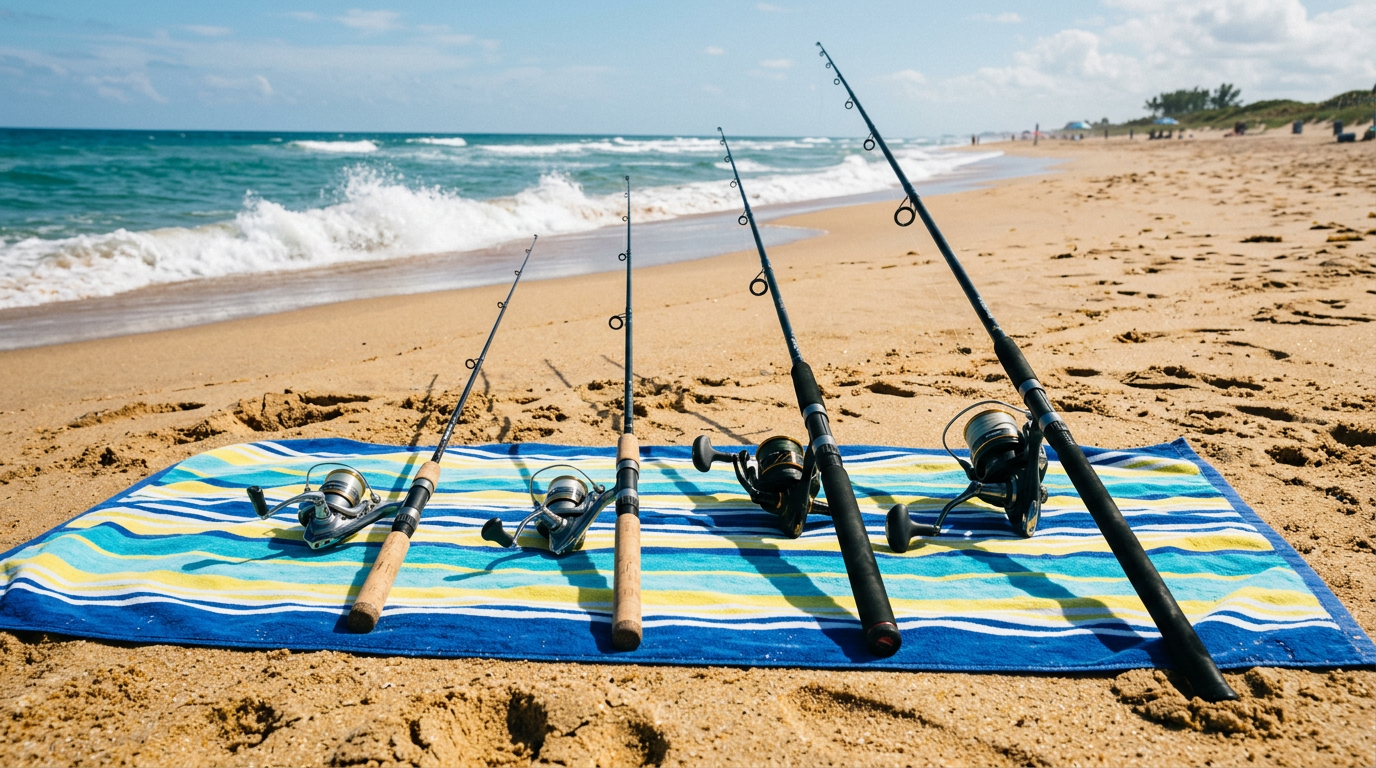
Rod length, power, action, and material all matter. Here's how to pick the perfect rod for Florida shore conditions.
Length: 7 Feet Is the Sweet Spot
For most Florida shore fishing situations, a 7-foot rod provides the best balance of casting distance and fish-fighting control. Longer rods (7'6" to 8') are better for surf casting where you need extra distance, while shorter rods (6'6" to 7') work better around mangroves and tight spots. If you can only own one rod, go with a 7-footer.
Power and Action Explained
Power refers to the rod's resistance to bending (light, medium, heavy), while action describes where it bends (fast, moderate, slow). For general Florida shore fishing, a medium or medium-heavy power with fast action is the most versatile choice. This combination handles everything from small whiting to a slot snook. Fast action also provides better sensitivity for detecting bites.
Material: Graphite vs. Fiberglass
Graphite rods are lighter and more sensitive — you'll feel every nibble and structure change. Fiberglass rods are tougher and more forgiving, great for beginners. Composite rods blend both materials and offer the best all-around value for most shore anglers. If you're experienced and want maximum sensitivity, go pure graphite.
Spinning vs. Casting
Spinning rods and reels are the overwhelming choice for Florida shore fishing. They handle lighter lures and baits better, are easier to cast, and work well in windy conditions — which is basically every day in Florida. Save the baitcasting setup for bass fishing; spinning gear is king on the coast.
Our Top Recommendations
For beginners, a durable composite rod like the Ugly Stik GX2 is hard to beat for value. Intermediate anglers can step up to the Ugly Stik Elite for more sensitivity. For serious anglers, the St. Croix Triumph delivers premium graphite performance you'll feel on every cast.