
How to Keep Frozen Shrimp on the Hook: A Florida Shore Fishing Guide
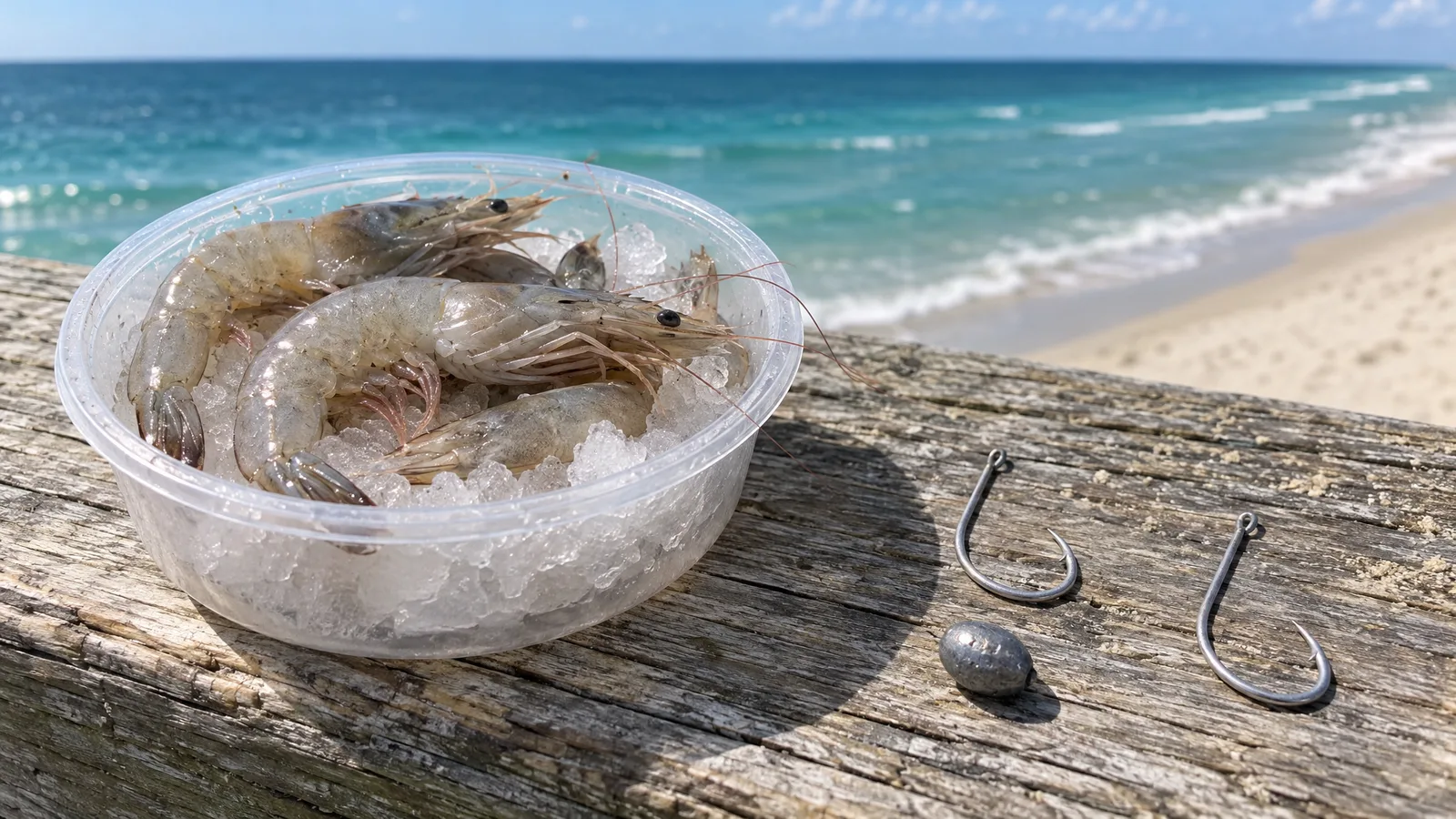
Quick answer
To keep frozen shrimp on the hook, thaw only a few at a time and keep them cold so the meat stays firm. Thread the hook through the body, starting at the tail or through a firm section, and bring the point back out so it stays exposed. Match the bait size to the hook, and lob the cast with a smooth sweep instead of a hard snap.
Frozen shrimp is one of the easiest baits to find in Florida and one of the easiest to lose on the cast. This guide explains why it comes off, how to prep it, and how to rig whole shrimp and pieces so they stay put from the beach, pier or bridge.
Why Frozen Shrimp Falls Off the Hook
Most lost baits come down to a few causes, and you can fix most of them before you ever cast.
Soft bait. Freezing breaks down the shrimp's flesh. Every time it thaws and warms up, it gets mushier and tears more easily.
Repeated thawing. A bag that melts in the sun, gets refrozen and is thawed again ends up as paste. It will not hold a hook no matter how you rig it.
Loose attachment. A single shallow stab through the shell gives the hook almost nothing to grip. The bait slides down the bend or flies off when the rig snaps forward.
Oversized portions. A large shrimp on a small hook hangs off the bend, swings on the cast and tears free. Small fish can also pull it off without touching the point.
Bait thieves. Pinfish, grunts and small crabs pick shrimp apart quickly, especially around pier pilings and rocks. Sometimes the bait did stay on, until something ate it.
Forceful casting. A hard, snapping cast whips the bait forward faster than soft flesh can handle. This is the most common cause on the beach, where anglers cast heavy sinkers for distance.
Prep: Thaw Smart and Keep It Cold
Firm bait stays on the hook. Soft bait does not. How you handle shrimp before it touches the hook matters as much as how you rig it.
Thaw only what you need. Take out a few shrimp at a time instead of the whole block. Leave the rest frozen in a small cooler with ice.
Keep it chilled, not soaked. Put thawed shrimp in a small container or zip bag set on ice. Avoid letting them sit in meltwater, which makes them waterlogged and soft.
Do not refreeze. Shrimp that has fully thawed and been refrozen loses even more texture. Plan to use it or toss it at the end of the trip.
Know when bait is too soft. If the shell slips off easily, the meat looks gray and mushy, or it smells sour, it will not hold well. Use it as chum or cut it into tiny pieces for small hooks, and start with fresh bait.
Buy bait sold for fishing. Pick up bait shrimp from a reputable local bait and tackle shop rather than imported grocery-store shrimp. Imported farmed shrimp can carry white spot syndrome virus, and freezing does not reliably kill it. Some states restrict non-native shrimp as bait. A Florida-specific rule was not confirmed for this guide, so local bait is the cautious choice.
Sources: Iowa State University CFSPH: White Spot Disease fact sheet
How to Hook a Whole Dead Shrimp
Threading a whole shrimp along the hook shank holds far better than a single stab through the shell. Here is a simple tail-first method that works with J and baitholder hooks.
- Pinch or bite off the tail fan. This leaves a clean opening and helps scent leak into the water.
- Push the hook point into the center of the tail end, through the opening you just made.
- Gently feed the shrimp up and around the bend so the shank runs inside the body. Keep the shrimp straight, not bunched.
- Bring the point out through the underside or back of the shrimp, roughly a body section or two before the head.
- Check that the point and barb are fully exposed and the shrimp hangs straight below the eye of the hook.
How to Hook Shrimp Pieces
Pieces are often better than whole shrimp for small-mouthed fish like whiting, pompano and sheepshead, and when pinfish keep stealing bait. They also tend to cast better, because there is less loose weight swinging off the hook.
- Peel or leave the shell on (see below), then cut the shrimp into two or three chunks about the size of the hook gap.
- Push the point in through the firmest part of the piece, usually the thicker middle section.
- Thread it around the bend and up the shank, then bring the point out the side.
- For extra hold, push the point back through the piece a second time so the meat sits on the shank in an S shape.
- Leave the point and barb exposed, and make sure the piece is not covering the hook gap.
J Hooks, Baitholder Hooks and Circle Hooks
The hook style changes how you thread the shrimp and how you set the hook.
J hooks and baitholder hooks. A baitholder is a J hook with small barbs cut into the shank. Those barbs grip the bait and help stop it from sliding down the bend, which makes them a good match for soft shrimp. You can thread these fully with the point exposed. When you feel a bite, a firm sweep of the rod sets the hook.
Circle hooks. Circle hooks are designed to slide to the corner of a fish's mouth, which helps reduce deep hooking. They only work well if the point and the gap stay clear. Hook the shrimp lightly through the tail or a firm section rather than burying the whole hook. Do not jerk to set the hook. Let the fish take the bait, then reel steadily or let the rod load as the line tightens.
FWC gear rules include hook requirements for some species and situations, such as non-stainless steel circle hooks for reef fish caught on natural bait in many Florida waters. Check the current rules before you go.
Sources: FWC: Saltwater gear rules; FWC: Fish handling and release
Shell-On vs. Peeled Shrimp
Shell-on shrimp is tougher. The shell acts like armor, so the bait stays on longer when casting and resists small bait thieves. The downside is less scent in the water, and some fish may nibble at it without committing.
Peeled shrimp gives off more scent and is easy for small-mouthed fish to eat. It is also much softer and comes off more easily. Peeled pieces work best on small baitholder hooks, short gentle casts, or when dropping straight down from a pier.
A common middle ground is to leave the shell on and pinch off only the tail fan. That keeps the bait firm while still letting scent escape.
What Size Hook Should You Use?
There is no single correct hook size for shrimp. Hook sizing is not standardized across brands, so a size 1 from one manufacturer can be noticeably larger or smaller than a size 1 from another. Hook styles also differ, and circle hooks are often sized differently than J hooks.
Instead of chasing a number, match the hook to the bait and the fish. The shrimp or piece should cover most of the shank, while the point and gap stay clear. Smaller hooks with small pieces suit whiting, pompano and sheepshead. Larger hooks with whole shrimp suit redfish, black drum and snook. If baits keep sliding off, try a slightly larger hook or a smaller piece.
Bait Elastic and Other Retention Aids
Bait elastic is a thin, stretchy thread you wrap a few times around the bait and hook shank. It sticks to itself and breaks off with a quick pull, with no knots needed. It can help soft shrimp survive a long cast from the surf.
It has limits. Elastic does not fix bait that is already mushy, and too many wraps can mask the hook point or make the bait look unnatural. Use a few light wraps, and keep the point clear.
Pack it out. Leftover elastic, monofilament line and bait packaging can tangle birds and turtles. Bring a small trash bag, cut line into short pieces before disposal, and use monofilament recycling bins where piers and parks provide them.
Rigging Methods Compared
Use this table to pick a method based on where and how you are fishing.
| Method | Suitable use | Advantage | Limitation |
|---|---|---|---|
| Whole shrimp, threaded tail-first | Surf and pier, larger fish | Holds well, looks natural | Bigger profile is easy for small fish to pick at |
| Pieces, double-pierced | Whiting, pompano, sheepshead | Compact and casts well | Less hold if the meat is soft |
| Light hooking through the tail | Circle hooks, short casts or drops | Keeps the circle hook gap clear | Can tear free on hard casts |
| Peeled pieces on a baitholder | Calm water, small fish | Strong scent, easy to eat | Softest option, comes off easily |
| Any method plus bait elastic | Long surf casts | Extra hold for soft bait | Adds litter risk and can mask the point |
Casting From the Beach vs. Dropping at a Pier or Bridge
From the beach, distance matters, so retention matters most. Use firm, shell-on bait or compact pieces, thread them fully, and consider a few wraps of elastic. Load the rod slowly with a smooth overhead or side sweep instead of snapping it. A steady cast often goes just as far and keeps the bait on. For rod, reel and rig choices, see the best surf fishing setup for Florida beaches.
From a pier or bridge, you can often drop the bait straight down beside pilings without casting at all. That lets you use softer, peeled pieces and lighter hooking. Expect more bait thieves around structure, so check your bait often and use smaller pieces. Follow posted pier rules and give other anglers room.
Troubleshooting: Why Your Shrimp Still Comes Off
Match what you are seeing to a likely cause and try one change at a time.
| Symptom | Likely cause | Adjustment |
|---|---|---|
| Bait gone after the cast | Hard snap cast or soft bait | Smoother cast, colder bait, add elastic |
| Bait slid down the bend | Shallow single stab | Thread along the shank or use a baitholder |
| Bait stripped, no hookups | Small fish picking at a large bait | Smaller pieces and a smaller hook |
| Bites but fish not hooked | Point or gap covered | Expose the point; hook circle hooks lightly |
| Bait mushy within minutes | Thawed too early or sitting in meltwater | Thaw a few at a time and keep them dry on ice |
| Shell slips off the meat | Bait refrozen or old | Replace with fresh bait shrimp |
Beginner Tackle Checklist
You do not need much gear to fish frozen shrimp from shore. A simple kit covers most situations.
- Frozen bait shrimp from a local bait shop
- Small cooler or insulated bag with ice
- A few hook sizes in baitholder and/or circle style
- Bait elastic for long surf casts (optional)
- Pliers or a dehooking tool
- Small knife or bait scissors
- Trash bag for line, elastic and packaging
- A valid Florida saltwater fishing license, unless you are exempt
As an Amazon Associate, Florida Shore Bite earns from qualifying purchases.
- Search on Amazon
Saltwater circle hooks (non-stainless)
Compare sizes and wire styles across brands.
- Search on Amazon
Baitholder hooks for saltwater
Shank barbs help grip soft bait.
- Search on Amazon
Bait elastic thread
Optional aid for long casts.
- Search on Amazon
Small bait cooler
Keeps thawed shrimp cold and firm.
Rules and Licenses
Most anglers need a Florida saltwater fishing license to fish from shore, piers or bridges, though there are exemptions and a free shoreline license option for residents. Size limits, bag limits, seasons and gear rules change, so check FWC before every trip.
Sources: FWC: Saltwater fishing licenses; FWC: Saltwater fishing regulations
Frequently Asked Questions
How do you keep frozen shrimp from falling off the hook when casting?
Keep the shrimp cold so it stays firm, thread it along the hook shank instead of stabbing it once, use a piece sized to the hook, and cast with a smooth sweep rather than a hard snap. A few wraps of bait elastic can help on long surf casts.
Should I use whole shrimp or pieces?
Pieces are usually better for small-mouthed fish like whiting, pompano and sheepshead, and when bait thieves are active. Whole shrimp suit larger fish such as redfish and black drum.
Is peeled or shell-on shrimp better?
Shell-on shrimp stays on the hook better and resists small fish. Peeled shrimp releases more scent but is softer and comes off more easily. Pinching off only the tail fan is a good compromise.
What size hook should I use for frozen shrimp?
There is no universal size, because hook sizing varies between manufacturers and styles. Choose a hook the bait mostly covers while leaving the point and gap clear, and go smaller for small fish.
Can you hook frozen shrimp on a circle hook?
Yes. Hook it lightly through the tail or a firm section so the point and gap stay clear, and do not jerk to set the hook. Reel steadily or let the rod load as the fish swims off.
Can I refreeze leftover bait shrimp?
It is best not to. Refrozen shrimp gets softer and comes off the hook more easily. Thaw only what you need and keep the rest frozen on ice.